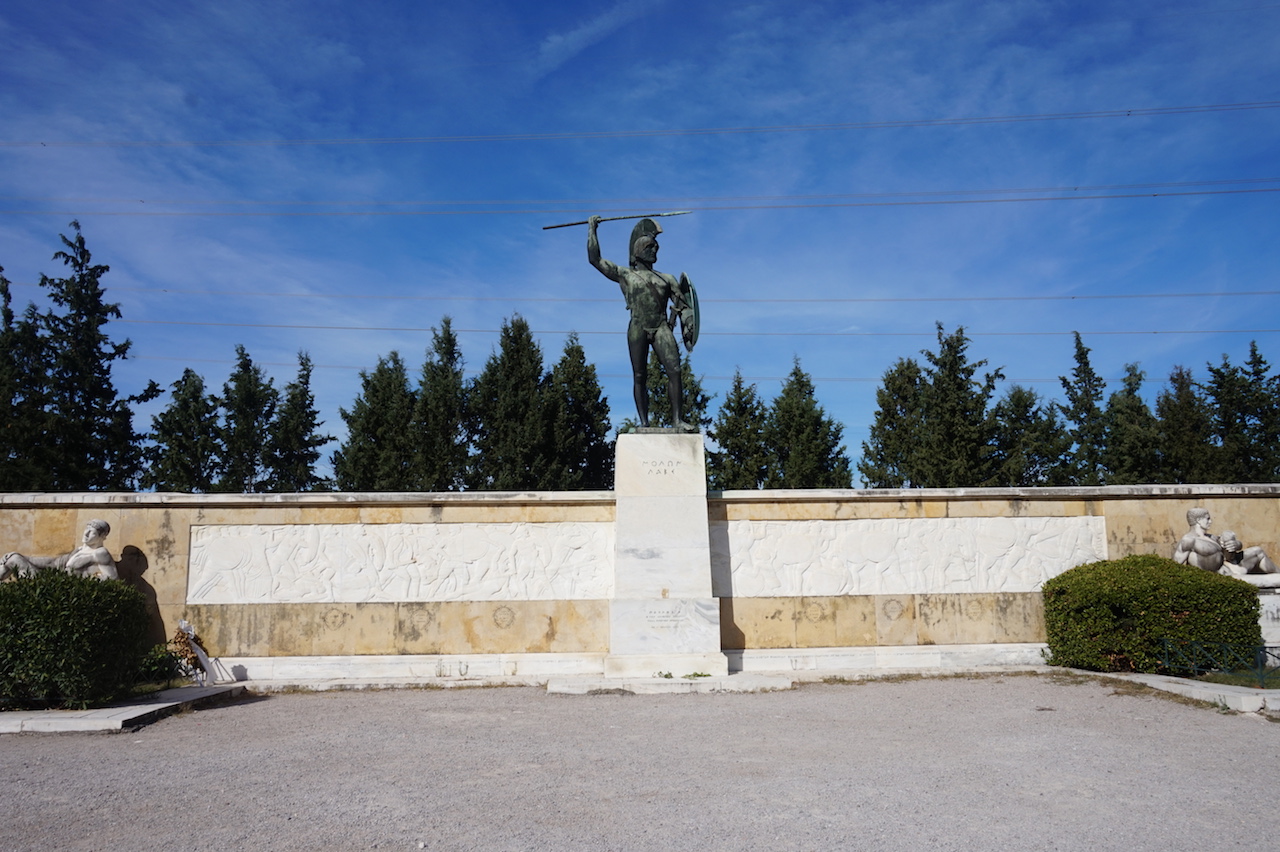
Where are your travel reports? You did not merely stop at Delphi, did you?
Chill guys, chill. I wrote some articles in between, and there has not been a lot of content lately, and I explained the difficulties of blogging while living the van-life and promised to try to provide more content. And try I did, and I failed miserably. Yes I know, I’m crap.
The last report was from Delphi, and that’s where we left into the general direction North. Coming across the famous Thermopyles, we decided to stop there and have a quick look around since we figured that there is not much to see.
Thermopyles
Hollywood blockbusters have shown us quite a wrong Image of the place and the battle that took place. So, let’s set the records straight here.
YES, the Greeks fought a vast Persian army here and hold the natural chokepoint for about a week.
YES, Leonidas and his 300 Spartans fought there and died in the end.
YES, they were betrayed by a local who showed the Persians an alternative path.
NO, it was not just the Spartans fighting here.
NO, It was never meant to be a suicide mission.
NO, Leonidas did not die as the last man standing.
So let’s check the field of battle.
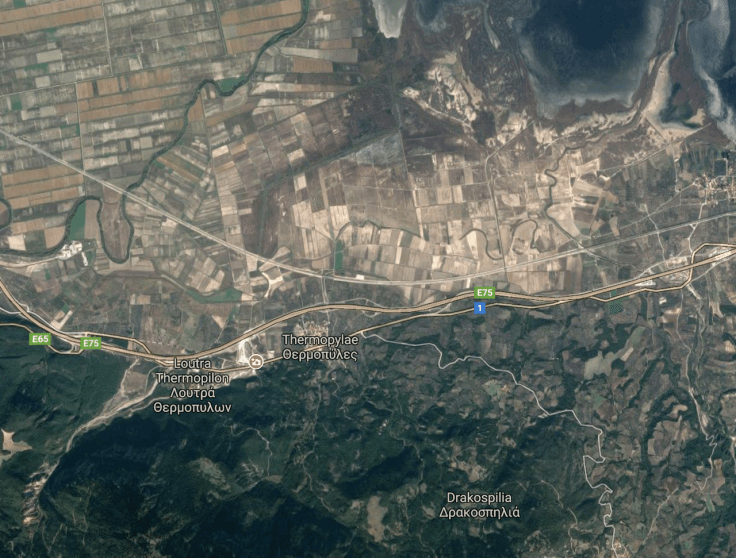
You have to notice that a small Greek force of about 7000 men could never block the passage from the sea to the foot of the steep mountains. Well, you are right but I can tell you so much that in today’s Greece, there are far more dry riverbeds then actual rivers and back in the days the Ocean around the spot had much more surface than today.
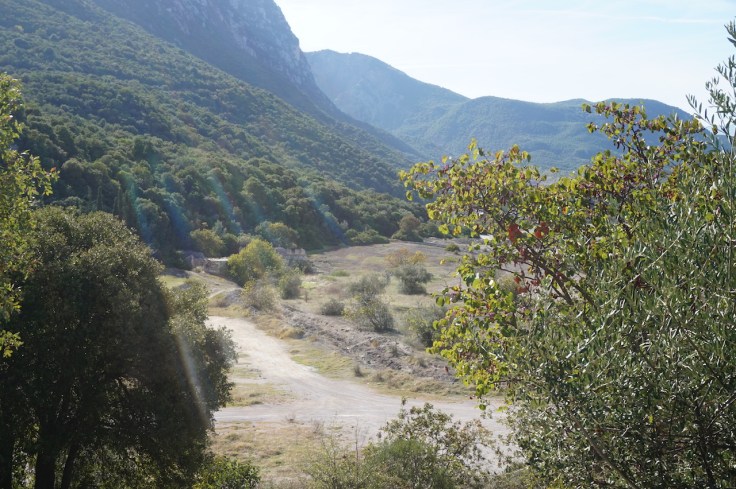
The mountains, however, are still as steep as they were back in the times. Looking onto the battlefield from the small hill which marked the spot the last Greek soldiers made their last stand you see the inclination up to the mountains.
You might think: Well, that is steep terrain but not unclimbable, with a little bit of time you could get soldiers and equipment up there.
But for now, I’d like to throw a simple argument into the room: Logistics.
Think about it, just for a minute. The Greeks had to supply about 7000 Soldiers, the Persians between 100- to 150.000.
The superiority in numbers had the downside, that the Persians HAD to move on since an army this large will just eat, drink and burn up everything in its closer perimeter within days. You also cannot start walking in a line through heavy terrain with those soldiers. This would be a seemingly endless line very susceptible to command issues, just begging to be ambushed by “hit and run” attacks. Merely no option other than a frontal assault on the Greek army.
The Greeks, on the other hand, had developed and perfected a battle formation called the Phalanx. Which was entirely perfected to hold a position and was not exceptionally maneuverable but best suited for frontal combat. This specialization should be the downfall of the Greeks against the Romans in later history but for battle on a naturally limited battlefield – there was no combat formation just as efficient as the Phalanx. It was so useful that it was used and perfected from its first forms 700 years BC up to the middle ages.
Long story short: The Greeks hold the Persians of successfully over a week, and most of the Greeks fled, when the message made their way through the ranks, that the Persians were surrounding them.
Only at this point in time the Spartan hoplites and their king decided to stay and fight to the end, and some other Greek soldiers decided to do the same.
The small hill, from which I took the picture was the last desperate stand for the Greek warriors who fought fiercely to the last and made the victory of the Persian army a pricey one.
Oh, my…. I got carried away a little bit on that topic since it is fascinating to me as a person. I might have to save Sanctuaries of Meteora for the next Article since there is just too much stuff to cover. Well, that may be disappointing on the first glance, but if you see the bright side of it: There’s still more to explore and in greater detail then just a swift glance.
 EU - Adventure